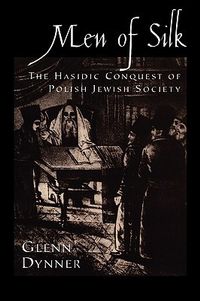
Men of Silk: The Hasidic Conquest of Polish Jewish Society
Important read for anyone wishing to understand history of Hasidism as opposed to philosophy / theology of same. Good...
Hasidism, a kabbalah-inspired movement founded by Israel Ba'al Shem Tov (c1700-1760), transformed Jewish communities across Eastern and East Central Europe. In Men of Silk, Glenn Dynner draws upon newly discovered Polish archival material and neglected Hebrew testimonies to illuminate Hasidism's dramatic ascendancy in the region of Central Poland during the early nineteenth century. Dynner presents Hasidism as a socioreligious phenomenon that was shaped in crucial ways by its Polish context. His social historical analysis dispels prevailing romantic notions about Hasidism. Despite their folksy image, the movement's charismatic leaders are revealed as astute populists who proved remarkably adept at securing elite patronage, neutralizing powerful opponents, and methodically co-opting Jewish institutions. The book also reveals the full spectrum of Hasidic devotees, from humble shtetl dwellers to influential Warsaw entrepreneurs.
Download or read Men of Silk: The Hasidic Conquest of Polish Jewish Society in PDF formats. You may also find other subjects related with Men of Silk: The Hasidic Conquest of Polish Jewish Society.
- Filetype: PDF
- Pages: 400 pages
- ISBN: 9780195382655 / 0
SkPLee13Lw-.pdf
More About Men of Silk: The Hasidic Conquest of Polish Jewish Society
The author clearly knows his subject. A careful, scholarly look at the rise of Hasidism in Poland during the 1700s, a time remarkable for its changes in that country, and subsequently. As always, seeing how political necessity interacted with the Jews is painful, and anyone who has read history of that period is not going to find anything new. What they will find is the... Important read for anyone wishing to understand history of Hasidism as opposed to philosophy / theology of same. Good use of both internal and external sources. Differs from Rossman who is more dismissive of internal sources and from the various and sundry hagiographers out there. Somewhat narrow focus on Hasidism in Central Poland...